How shared expertise, lived experience, and generous insights help authors write richer, more credible books
Most books may have one author’s name on the cover, but few are created from one person’s knowledge alone.
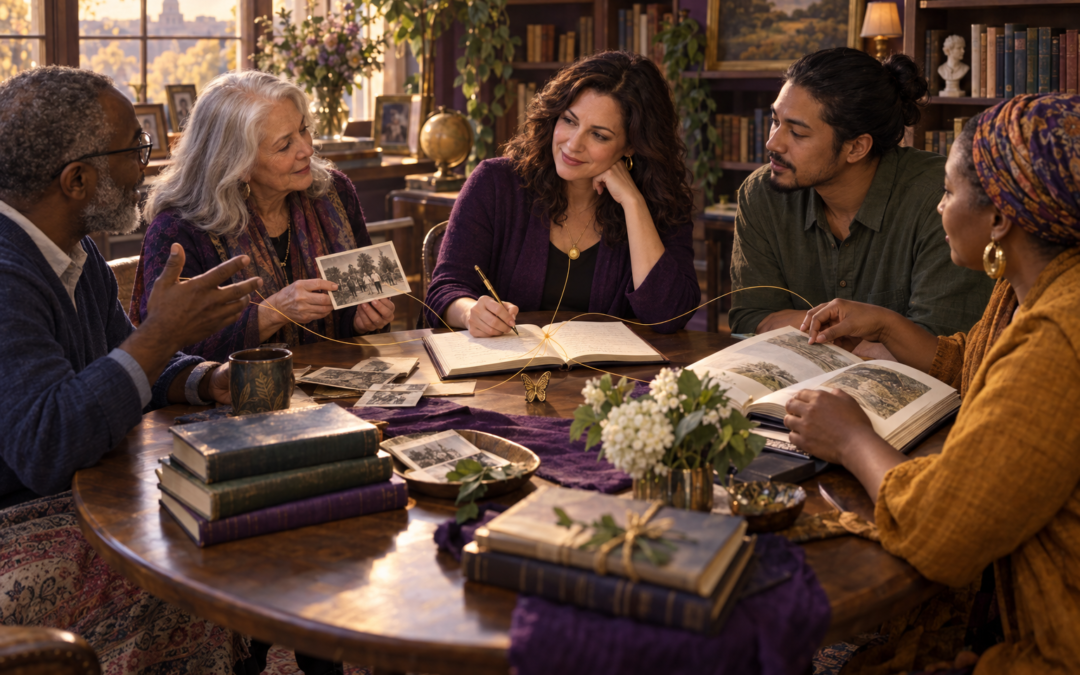
Behind the finished manuscript are often people who answered questions, explained unfamiliar worlds, shared memories, offered professional expertise, challenged assumptions, or trusted the author with a story that mattered. They may never have written a sentence of the book, yet something they contributed became part of its foundation.
These people are knowledge donors.
A knowledge donor is someone who generously shares expertise, lived experience, research, stories, observations, or insight so another person can understand, create, or communicate something more meaningfully.
For authors, knowledge donors can make the difference between a book that merely discusses a subject and one that feels informed, credible, textured, and true.
A Source Provides Information. A Knowledge Donor Adds Understanding.
Authors have always relied on sources. We consult books, articles, archives, studies, interviews, and experts. But the phrase knowledge donor recognizes something more personal than the word source often conveys.
A source gives us information.
A knowledge donor entrusts us with something they know.
That contribution might be the wisdom gained from a thirty-year career, the memory of a place that no longer exists, the truth of living through a difficult experience, or one well-timed observation that changes the direction of a chapter.
The word donor also reminds us that knowledge has value. When someone shares it with an author, they are giving time, perspective, emotional energy, and—in some cases—access to an experience the author could never fully understand alone.
Recognizing that generosity can change how we conduct interviews, use personal stories, verify information, and express our gratitude.
Who Can Be a Knowledge Donor?
A knowledge donor does not need an advanced degree, an impressive title, or a public platform. Formal expertise is valuable, but so is lived expertise.
An author’s knowledge donors might include:
- A subject-matter expert interviewed for a nonfiction book
- A person who shares a personal experience that informs a story or example
- A historian, researcher, archivist, or librarian who provides context
- A physician, attorney, educator, business owner, artist, or other professional who explains a specialized field
- A mentor who helps the author see an idea differently
- A beta reader who identifies what the intended audience needs to understand
- A community elder whose memories preserve a tradition, place, or event
- A fellow author who shares lessons from writing, publishing, or promotion
- A family member who helps reconstruct a memory or piece of family history
- A reader whose question reveals what the next book needs to address
Knowledge donors also appear in fiction. A novelist might speak with a police officer to understand investigative procedures, interview a nurse about hospital routines, or listen to someone describe the landscape and customs of a particular region. Those conversations help the writer create a world that feels lived in rather than merely researched.
Sometimes a knowledge donor contributes hours of conversation. Sometimes the gift is a single sentence the author cannot stop thinking about.
What Knowledge Donors Give a Book
Knowledge donors can strengthen a manuscript in several important ways.
Credibility
Expert insight helps an author avoid vague claims, factual mistakes, and oversimplification. It adds authority without requiring the author to pretend to know everything.
Authenticity
Lived experience introduces the emotional, cultural, and practical details that formal research may overlook. It helps the author understand not only what happened, but what it felt like.
Perspective
Every writer has blind spots. A knowledge donor may introduce a different interpretation, challenge an assumption, or reveal whose voice is missing from the conversation.
Specificity
Memorable writing is often built from precise details. The way a room sounded, the phrase people used, the mistake everyone made, or the lesson learned too late can give a chapter texture and life.
Possibility
One conversation can open an entirely new line of thought. Knowledge donors do more than fill gaps in a manuscript; they can help an author discover questions they did not know to ask.
How to Invite Someone to Become a Knowledge Donor
People are often willing to help when they understand why their perspective matters and how their contribution may be used.
An invitation can be simple:
I am writing a book about [subject] for [intended readers]. Your experience with [specific area] could help me represent this topic with greater accuracy and understanding. Would you be willing to share your perspective in a brief conversation? I would also like to discuss how you would prefer to be identified, quoted, or acknowledged.
That final sentence is important. Knowledge should not be treated as though it arrived without a person attached to it.
Before the conversation, clarify:
- The subject you hope to discuss
- How much time you are requesting
- Whether the conversation will be recorded
- Whether the person may be quoted directly
- Whether their name, title, or organization may be used
- Whether they prefer attribution, anonymity, or background-only participation
- Whether they will have an opportunity to verify quotations or sensitive factual details
Clear expectations protect both the author and the knowledge donor. They also create the trust necessary for a thoughtful conversation.
Receive the Gift Responsibly
Calling someone a knowledge donor should never become a way to claim unrestricted ownership of their story.
An ethical author listens carefully, takes accurate notes, confirms facts, respects boundaries, and distinguishes between permission to hear something and permission to publish it.
When working with personal or sensitive experiences, ask direct questions:
- May I include this story in the book?
- May I use your name?
- Would you prefer that I change identifying details?
- Is any part of this conversation off the record?
- May I contact you if I need clarification?
Authors should also avoid placing the burden of the entire book’s accuracy on one person. A knowledge donor contributes a perspective, not necessarily the only perspective. Important claims should still be researched, verified, and considered within a broader context.
The author remains responsible for how the knowledge is interpreted and presented.
Give Credit That Reflects the Contribution
Not every contribution requires the same kind of recognition. A formal quotation may need a citation. A personal interview might be acknowledged by name. A sensitive conversation may require anonymity. A major intellectual contribution may warrant more prominent credit or a separate agreement.
Depending on the book and the donor’s preferences, recognition could appear in:
- The acknowledgments
- A source note or endnote
- The introduction
- A contributor page
- A caption or quotation attribution
- A list of interview participants
- A private thank-you when public identification is not appropriate
An acknowledgment might read:
I am deeply grateful to the knowledge donors who shared their expertise, experiences, and hard-earned wisdom with me. Their generosity brought greater depth, clarity, and humanity to these pages.
Or it might be more specific:
My thanks to [Name], whose insight into [subject] helped me ask better questions and understand this issue from a perspective I could not have reached alone.
Credit should never be used as a substitute for consent, compensation, or a more formal arrangement when one is appropriate. But sincere recognition tells readers that the book was strengthened by a community of knowledge.
Create Your Book’s Knowledge Donor Map
At the beginning of a project, authors can create a simple knowledge donor map. Write the major questions your book must answer, then identify the people or perspectives that could help you explore them.
Consider these questions:
- What do I know through education, research, or experience?
- What am I assuming rather than truly knowing?
- Whose lived experience would deepen this subject?
- Which professional perspectives would improve its accuracy?
- Whose voice is missing?
- What stories, traditions, or memories could be lost if they are not recorded?
- Who could challenge my thinking before the manuscript reaches readers?
This is not about collecting impressive names. It is about discovering whose knowledge will help you serve the reader more responsibly.
Authors Are Knowledge Recipients Before They Become Knowledge Donors
Writing begins with receiving.
We receive ideas from conversations, questions from readers, lessons from mentors, information from experts, perspective from experience, and wisdom from people who have traveled paths we have not.
Then the author does the work only the author can do: evaluating, verifying, connecting, interpreting, and shaping that knowledge into a coherent book.
When the book reaches the reader, the relationship changes. The author becomes a knowledge donor.
What was gathered from many places is transformed into words that may help someone understand a problem, make a decision, feel less alone, imagine another life, or take the next step.
That is one of the quiet wonders of authorship. Knowledge is not simply transferred. It is received, considered, shaped, and passed forward.
The People Behind the Pages
Before your manuscript is finished, pause and look beyond the names likely to appear on the cover.
Who helped you understand what you were trying to say?
Who trusted you with an experience?
Who corrected an assumption, supplied a missing detail, opened a door, answered one more question, or gave you the insight that brought an entire chapter into focus?
These are the knowledge donors behind your book.
Recognizing them does more than express gratitude. It reminds us that meaningful books are rarely created in isolation. They grow through curiosity, conversation, trust, and the generous exchange of what people know.
And once the book is released, the exchange continues—because every author who shares what they have learned becomes a knowledge donor to someone they may never meet.
Who are the knowledge donors behind your writing—and how did their generosity change what you were able to give your readers?