You answered the questions, told the story behind your book, and shared a little of yourself that readers would never find in a book description. Then the interview went live.
What happens next?
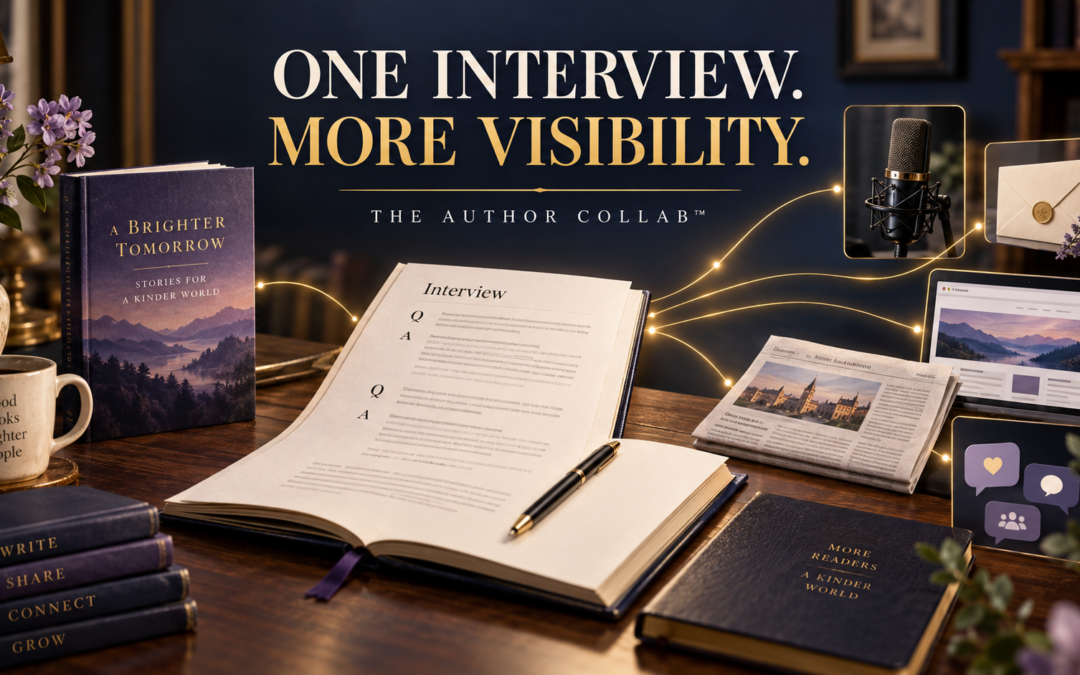
An author interview can keep working long after publication. It gives readers a way to connect with you, gives event organizers a sense of how you communicate, and gives podcast hosts and journalists a starting point for a conversation. It can also lead interested readers toward your book—if you make that next step easy.
Here are ten ways to put your interview to work.
1. Give it a permanent home on your website
Add the interview link to your author website under “Media,” “Interviews,” or “About the Author.” If it focuses on one book, link to it from that book’s page as well.
Write a sentence that tells visitors why they might want to read it: “In this Off the Page interview, I share the family story behind my book and what I hope caregivers take from it.” A descriptive link helps visitors understand where they’re going; Google also recommends meaningful link text.
2. Send it to your email subscribers
Your subscribers may know your book title without knowing why you wrote it. Choose one answer from the interview that reveals something new, then invite them to read the rest.
You might write:
I recently shared the story behind [Book Title] in an Off the Page interview. I talked about the moment the idea became a book—and the question I hope it helps readers explore.
Link to the interview and include a separate, clearly labeled book link for anyone ready to learn more.
3. Make several social posts from different answers
A single “My interview is live!” post is a good start. Look through your answers for three or four ideas that can each stand on their own: a turning point, a surprising lesson, a question for readers, or a glimpse of what you’re writing next.
Pair each post with a relevant image and a link to the full interview. If you use a quotation graphic, check the quote against the published text. Readers may discover your interview weeks after its first announcement.
4. Add it to your media kit
A media kit usually tells people what you write and how to contact you. An interview lets them hear how you talk about your work.
Include its title, publication, date, and link alongside your bio, book information, photos, and speaking topics. A podcast host can use it to see which subjects you discuss with energy and clarity. It may even prompt a question they would not have thought to ask.
5. Pitch a different angle to podcasts
Your interview can be a useful example of a conversation you’ve already had. It is not the pitch itself.
Read through it and identify one topic a particular show’s listeners would care about. If your interview discusses a book about grief, for instance, a parenting podcast might be interested in how families talk with children about loss. A writing podcast might want to explore how you handled a difficult subject on the page.
Lead with that audience-specific idea. Then include the interview link as background:
I recently discussed the story behind the book in this interview, which gives you a sense of my approach.
6. Give local media a local reason to care
A hometown connection can open a door, but “I was interviewed” may not be enough of a story for a newspaper, radio show, or local website.
Find the local angle first. Are you holding an event at a nearby bookstore or library? Does your book address an issue a local organization is working on? Did an experience in your community shape it?
Pitch that story, then offer your interview as supporting background. Make it easy for the person receiving your note to see why their audience would be interested now.
7. Share it with relevant groups and organizations
Think beyond groups for writers. A book’s subject may connect you with a library program, professional association, book club, community organization, or support group.
Read each group’s sharing rules before posting. Introduce one useful idea from your interview, explain its relevance to that community, and include the link where appropriate. A personal note to an organizer can also open a conversation about a discussion or event.
8. Use it to propose an event
An interview can show a librarian, bookstore owner, or event planner that you have more to offer than a reading and a signing.
Turn one strong answer into a discussion topic. “How I wrote my book” might become “Writing a Family Story with Care,” “Turning Professional Experience into a Book,” or “What Readers Can Learn from a Difficult Conversation.” Send the organizer the proposed topic, who it serves, and your interview link.
9. Guide interested readers to the book
Someone moved by your story should not have to search for your book afterward. When you share the interview on your website or in an email, place a clear book link nearby. Make sure the book page includes its description, cover, and buying options.
Keep the invitation connected to what the reader just learned. For example: “If this conversation resonates with you, you can learn more about the book here.” The goal is to help the right reader take the next step.
10. Track what happens—and follow up
Keep a simple record of where you shared the interview, whom you contacted, and what happened next. Note replies, event invitations, podcast interest, website visits, email signups, and any book sales you can reasonably connect to a particular effort.
If you use Google Analytics on your website, campaign links can help distinguish traffic from an email, a social post, or another promotion. Google’s guide to campaign URLs explains how to label those links. Sales may be harder to attribute, so look for patterns instead of assuming every result came from one post.
Give the interview a longer life
You do not need to do all ten things in a day. Start with your website and email list. Choose two answers to share on social media. Then identify three relevant people or organizations you could contact with a specific idea.
An interview helps readers meet the person behind the book. Sharing it thoughtfully helps that conversation reach people who might value the book, invite you to speak, or introduce your work to someone else.
If you’ve been featured in an Off the Page interview, start here: save the interview link, add it to your website, and choose the one answer you most want new readers to see.