Social media is borrowed space. Your email list is a relationship you can actually build.
Let's talk about something that might make you groan.
Another newsletter.
Yes, I know. Your inbox is already overflowing with book recommendations, marketing advice, webinar invitations, and at least three people promising to teach you how to become a bestselling author by Thursday.
So why on earth would I suggest starting another one?
Because if you're an author, a newsletter may be one of the smartest investments you can make in your writing career right now.
And no, you don't need 10,000 subscribers, a marketing degree, or an assistant named Tiffany to make it work.
You just need something worth sharing and a few people who want to hear from you.
1. Social Media Is Rented Space
Imagine spending years building a beautiful bookstore, filling it with readers, hosting conversations, and creating a welcoming community.
Then one morning, the landlord changes the locks.
That's essentially what can happen when you rely entirely on social media to connect with your audience.
Algorithms change. Accounts get restricted. Platforms lose popularity. And the people who enthusiastically followed you yesterday may never see your next announcement.
An email list gives you a more direct connection with readers who have chosen to hear from you.
You still depend on an email service provider and good deliverability, of course. But unlike your social media followers, your subscriber list can generally be exported and moved to another provider.
Social media helps people discover you. A newsletter helps them remember you.
2. Readers Want More Than Another Sales Pitch
Here's a little secret: Most readers don't wake up wondering whether you've posted another link to your Amazon page.
Shocking, I know.
But they might be interested in the fascinating research behind your historical novel, the real-life experience that inspired your memoir, or the writing disaster that eventually became your favorite chapter.
Your newsletter is an opportunity to share the stories behind the stories.
And you don't have to sell something in every issue.
In fact, the more consistently you offer something entertaining, helpful, or meaningful, the more reasons subscribers have to keep opening your emails.
When your next book arrives, you'll already have a relationship with those readers.
3. AI Is Making Genuine Connections More Valuable
Artificial intelligence can generate content faster than most of us can finish our morning coffee.
It can draft emails, suggest headlines, create marketing copy, and help organize ideas.
But here's what it can't replace: your lived experiences, your perspective, your personality, and the particular way you connect with people.
As AI-generated content becomes increasingly common, an author's authentic voice can become an important point of distinction.
A newsletter gives readers an opportunity to know the person behind the books.
Your humor. Your observations. Your occasional confession that you've rewritten the same paragraph fourteen times.
Those details make you memorable.
Readers may discover your book because of its subject. They may become loyal followers because of you.
4. You Don't Need a Book Launch to Have Something to Say
One of the biggest mistakes authors make is waiting until they have a book to promote before building an email list.
But a newsletter isn't just a book-launch tool.
It's a relationship-building tool.
You can start while you're writing your first manuscript, researching your next project, or wondering whether your current work-in-progress will ever actually progress.
Share what you're learning. Recommend books you've enjoyed. Ask readers questions. Invite them into your creative world.
By the time your book is ready, you may already have an audience interested in its journey.
And if your book is already published? There's no expiration date on starting a conversation with readers.
5. Small Lists Can Create Big Opportunities
Let's get one thing straight.
You don't need thousands of subscribers to have a successful newsletter.
A list of 100 genuinely interested readers can be more valuable than 5,000 people who subscribed for a free download and promptly forgot who you are.
Think about what a small, engaged community can do.
Readers can recommend your books, share your articles, participate in early-reader opportunities, leave honest reviews, and introduce your work to others.
The goal isn't simply to collect email addresses.
It's to build connections that extend beyond a single book.
6. Keep It Simple. Seriously.
If the thought of writing a weekly newsletter makes you want to hide beneath your manuscript, don't write a weekly newsletter.
Start monthly.
Keep it short.
Choose two or three things you enjoy sharing and create a repeatable format.
For example:
- What's New: A quick update about your writing or publishing journey.
- Worth Sharing: A book recommendation, interesting article, or useful resource.
- Behind the Book: A personal story, writing insight, or glimpse into your creative process.
That's it.
You don't need a ten-page publication, elaborate graphics, or a complicated marketing funnel.
You need consistency, personality, and something your readers will enjoy.
And if you miss an issue occasionally? You're human. Your readers probably suspected that already.
7. The Best Time to Begin Is Before You Think You're Ready
Here's the truth about building an author newsletter.
Your first issue probably won't be perfect.
Your subscriber list may begin with a handful of friends, fellow writers, and one enthusiastic relative.
That's fine.
Every successful newsletter started with a first subscriber.
Don't wait until your website is perfect, your next book is finished, or you've mastered every feature of your email marketing platform.
Choose a name. Create a signup form. Invite people who want to hear from you. Send something worth reading.
Then do it again.
And Yes, I'm Taking My Own Advice
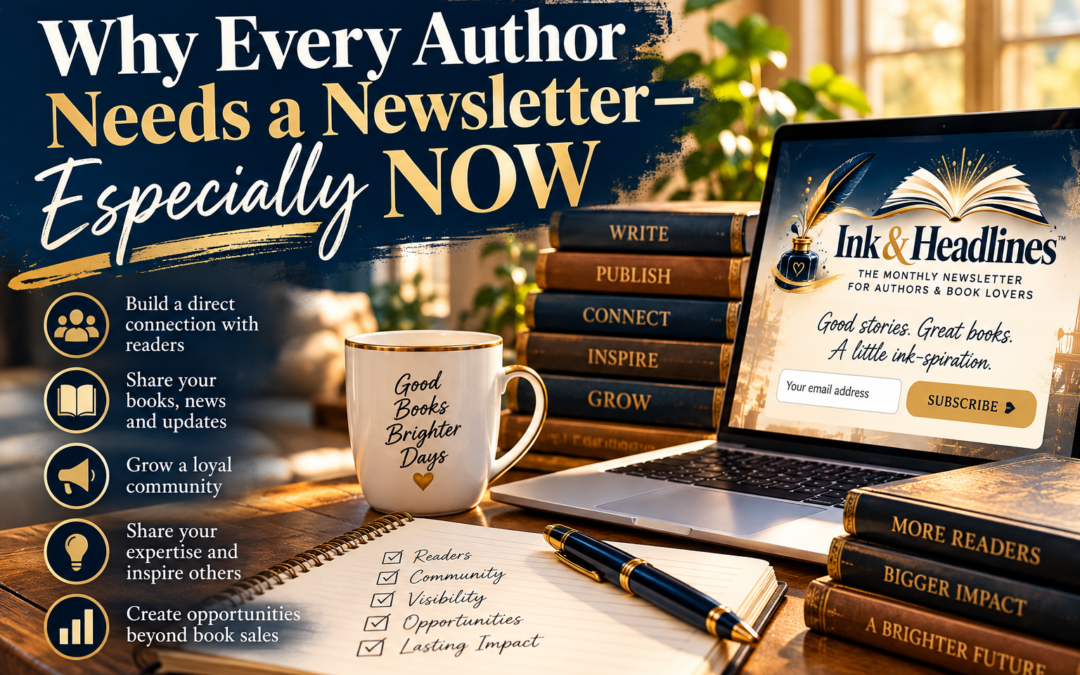
That's one reason we're launching Ink & Headlines™, a new monthly newsletter from The Author Collab.
We'll be sharing publishing news, introducing new books, featuring author interviews, and highlighting articles that help writers navigate the business and creativity of authorship.
Our goal?
Three minutes. Once a month. Good stories, great books, and a little ink-spiration.
Because staying informed shouldn't require a second cup of coffee. Although we're certainly not opposed to one.
Your Turn
Do you already publish an author newsletter? We'd love to discover it!
And if you've been thinking about starting one, consider this your friendly nudge.
You don't need permission, perfection, or a massive following.
You just need to begin.
Your future readers might already be waiting to hear from you.
The Author Collab™ — Connecting authors, celebrating books, and sharing ideas that help writers grow.