On September 25, a Nashville honky-tonk will become part celebration, part fundraiser, and part love letter to literacy.
Garth Brooks and Trisha Yearwood have announced that their Friends in Low Places Bar & Honky-Tonk will recognize September 25 as Dolly Day. The date—9/25—is a playful and fitting nod to Dolly Parton’s iconic song 9 to 5.
But the meaning behind the day reaches far beyond music.
The venue will donate its entire income from the day to children’s literacy, including support for Dolly Parton’s Imagination Library and Nashville Public Libraries. Brooks and Yearwood intend for Dolly Day to become an annual event.
It is a joyful tribute. It is also a powerful lesson in how a legacy grows.
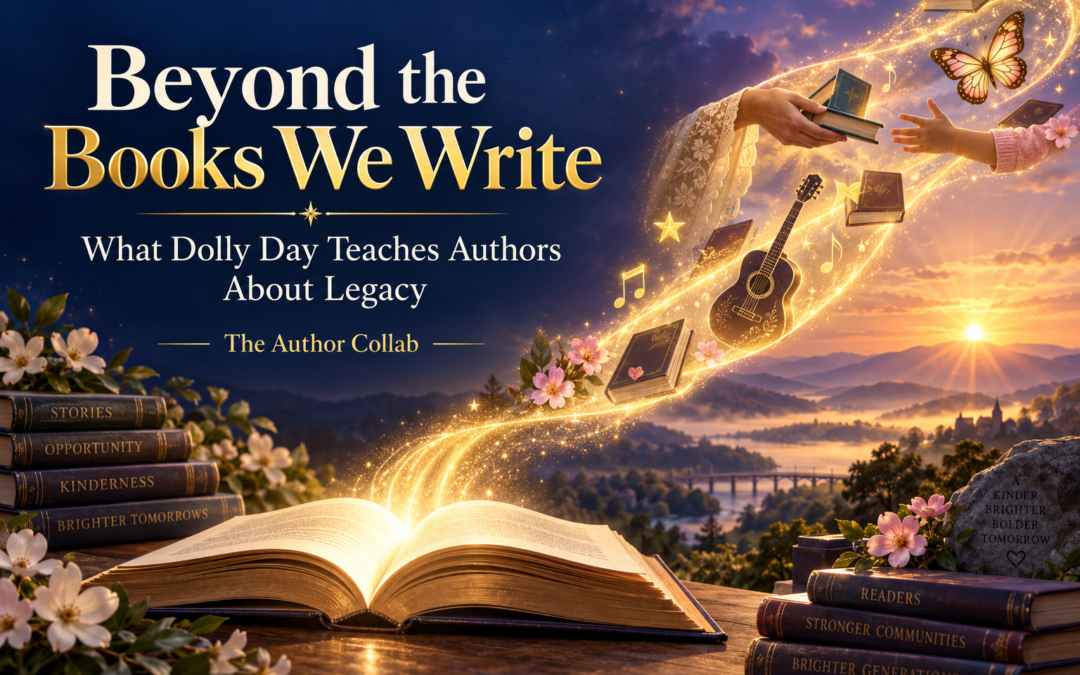
Dolly Parton gave the world songs, stories, performances, laughter, and unforgettable moments. Yet one of the most enduring parts of her legacy may be found in the millions of books mailed to children through the Imagination Library—the program she founded in 1995 to help young children develop a love of reading.
The program was inspired by her father, who never had the opportunity to learn to read or write. What began as a deeply personal desire to honor him grew into a worldwide literacy movement that has placed more than 300 million books into the hands of children.
That is what makes Dolly Day so meaningful. It does more than celebrate what Dolly created during her lifetime. It helps her work continue.
And there is something in that example for every author.
An Author’s Legacy Is Larger Than a Bibliography
When authors think about legacy, we often think first about the books bearing our names.
Will people still read them years from now? Will the message remain relevant? Will a story be passed from one reader to another?
Those are worthy hopes. Books can preserve our ideas, experiences, imaginations, and values long after we have written the final sentence.
But an author’s legacy is not limited to the number of books written, copies sold, awards received, or bestseller lists reached.
It also lives in the readers we encourage.
It lives in the child who receives a first book, the aspiring writer who finally believes her voice matters, the neighborhood library that gains new resources, and the adult who rediscovers reading after years away from it.
Our books are part of our legacy. The love of reading we help create can be another part.
Turning a Memorable Idea Into Meaningful Impact
Dolly Day is also a brilliant example of giving a cause a memorable identity.
September 25 could have been treated as an ordinary fundraising date. Connecting 9/25 to 9 to 5 transforms it into something people can instantly understand, remember, and share.
The name creates curiosity. The date reinforces the story. The cause gives it meaning. Making it annual allows the impact to grow.
Authors can learn from that structure when supporting causes of their own:
- Begin with an authentic connection. Choose a cause related to your book, your personal history, your community, or a value you genuinely care about.
- Give the effort a memorable identity. A meaningful name, date, theme, or tradition can make an initiative easier for others to recognize and support.
- Connect attention to action. Do more than post about the cause. Invite people to donate books, volunteer, sponsor a reader, attend an event, or support an organization.
- Make it repeatable. A small annual effort can build more trust and accomplish more over time than one ambitious event that is never repeated.
- Invite collaboration. Authors, bookstores, libraries, schools, local businesses, book clubs, and reader communities can often accomplish more together than any one person can alone.
This is cause-based visibility at its best. The cause is not used as a marketing prop. Visibility becomes a way to bring more attention and resources to work that matters.
You Do Not Need a Celebrity-Sized Platform
Most authors cannot donate an entire day’s business income or reach an international audience. That does not make our contributions insignificant.
Legacy is built through consistency as much as scale.
An author might:
- Donate copies of a children’s book to a school, shelter, hospital, or Little Free Library.
- Give a portion of sales from one day or one title to a literacy organization.
- Adopt a classroom and help provide books from its wish list.
- Volunteer to read at a school, library, senior center, or community program.
- Organize an annual birthday book drive instead of requesting gifts.
- Offer a workshop for young writers or emerging authors.
- Partner with a local business for a book collection or literacy fundraiser.
- Sponsor an Imagination Library enrollment where local partnerships permit it.
- Use an author platform to spotlight librarians, educators, literacy advocates, and organizations doing important work.
- Help another author’s book reach readers who need its message.
One donated book may become a child’s favorite. One encouraging conversation may help someone begin writing. One introduction may connect an author with an entirely new community of readers.
Small acts are not small to the person whose life they touch.
From Book Promotion to Book Purpose
Authors naturally spend a great deal of time thinking about visibility. We work to attract readers, earn reviews, secure interviews, appear at events, and keep our books from disappearing in a crowded marketplace.
That work is necessary. A book cannot create impact if no one discovers it.
But Dolly Day invites us to ask a different question:
How can the visibility surrounding my book help someone else?
That question does not diminish book promotion. It gives promotion a larger purpose.
A launch can include a book drive. An author anniversary can become an annual literacy event. A speaking engagement can support a classroom. A book club appearance can introduce readers to a local library initiative. A collaboration between authors can raise awareness for stories and causes that deserve greater attention.
When purpose and promotion meet authentically, everyone benefits. The cause receives support. Readers become part of something meaningful. The author builds relationships grounded in shared values rather than transactions alone.
Most importantly, books continue doing what books have always done best: creating connection.
The Legacy Question Every Author Can Ask
We cannot completely control how long our books remain in print, how many copies they sell, or which readers will remember our words.
We can decide what we stand for while we are sharing them.
We can choose to encourage reading, amplify other voices, support access to books, and help future writers believe that their stories are worth telling.
Dolly Parton’s Imagination Library demonstrates what can happen when a personal story, a love of books, and a commitment to service grow together. Dolly Day will help that love continue moving into new homes and new generations—one book and one young reader at a time.
Perhaps that is one of the finest legacies any author could hope to create.
An author’s legacy is not measured only by the books they write, but also by the love of reading they help create.
What book-related or literacy cause would you like to make part of your author legacy?