Why waiting for confidence, certainty, or perfection may be keeping your book from the readers who need it
Recently, author Marjorie Dudley shared something on LinkedIn that stopped me in my tracks.
She had begun writing Lead Yourself First ten years earlier.
Ten years.
Looking back, she wondered what might have happened if she had written and released the book then instead of waiting until she felt ready.
As part of that larger conversation, Marjorie wrote:
“…there is something powerful about pulling the trigger before you feel completely ready. Taking action shortens the learning curve. Doing the uncomfortable thing builds grit and resilience.
Putting your work into the world teaches you things that thinking, planning, preparing, and perfecting never will. And taking the risk means accepting that there will be critics—and deciding they don't get to make your decisions for you.”
Her words stayed with me.
Perhaps because I understand them better than I would like to admit.
It took me 20 years and 9 months to complete The Expectant Author.
Yes, you read that correctly.
A book built around the metaphor of pregnancy had one extraordinarily long gestation period.
During those years, I wasn't doing nothing. Far from it. I was building businesses, publishing magazines, writing other books, working with entrepreneurs, speaking, teaching, learning, and living.
And The Expectant Author kept waiting.
There were always other priorities. Other projects. Other deadlines.
And probably, if I'm being completely truthful, there was also a part of me that simply wasn't ready to deliver it.
Which raises an important question for every writer:
Was the book not ready... or was I?
The Myth of “Ready”
Writers talk about being ready all the time.
I'm not ready to publish.
I'm not ready to show anyone my manuscript.
I'm not ready to call myself an author.
I'm not ready to pitch a podcast.
I'm not ready to enter an award.
I'm not ready to contact bookstores.
I'm not ready to speak about my book.
But what exactly does “ready” mean?
If it means prepared, that's important.
If it means perfect, fearless, completely confident, certain of the outcome, and immune to criticism, we may be waiting forever.
There will almost always be another sentence you could improve.
Another chapter you could reconsider.
Another person whose opinion you could request.
Another book on writing you could read.
Another course you could take.
Another marketing strategy you could investigate.
Preparation can be valuable.
But preparation can also become a very respectable hiding place.
Sometimes “I'm not ready” is simply fear wearing a very respectable outfit.
There Are Two Kinds of Not Ready
This is where authors need to be honest with themselves, because not every hesitation is fear.
Sometimes your book genuinely isn't ready.
I think there are two very different versions of “not ready.”
Practical Not Ready
Sometimes your book genuinely needs more work before it is ready for the world. Your manuscript may still require substantive editing, facts may need to be checked, permissions secured, or formatting refined. Perhaps the cover doesn't accurately represent the book, beta readers have uncovered an important issue that deserves attention, or there are still gaps in your argument, plot, structure, or overall reader experience.
These are legitimate reasons to slow down and continue working. Publishing before your book is ready isn't courageous; it's simply premature. But there is another kind of “not ready” one that has far less to do with the manuscript and much more to do with the author.
Emotional Not Ready
This sounds more like:
What if people don't like it?
What if someone leaves a bad review?
What if another author has already said this better?
What if nobody buys it?
What if people think I'm not qualified?
What if I publish it and discover something I should have changed?
Those aren't usually manuscript problems.
They're vulnerability problems.
And no amount of editing can completely eliminate them.
At some point, the question changes from:
“Is my book ready?”
to:
“Am I willing to let people see it?”
Those are two entirely different questions.
What Is Waiting Costing You?
We frequently think about the risk of publishing.
We don't talk nearly enough about the risk of waiting.
Marjorie wondered what might have happened if she had moved forward with her book ten years earlier.
I can certainly ask myself the same question about The Expectant Author.
What if I had finished it five years earlier?
Ten?
Fifteen?
How many writers might I have reached?
What conversations might it have started?
What doors might it have opened?
I'll never know.
And neither will Marjorie.
That's the hidden cost of waiting.
We see the possible consequences of taking action because they're visible.
A disappointing launch.
A rejection.
A critical review.
An award we don't win.
A pitch that receives no response.
But the consequences of not acting are invisible.
We don't see the reader who never discovered our book.
The podcast invitation that never happened.
The relationship that was never formed.
The speaking engagement that wasn't offered.
The collaboration that couldn't develop because nobody knew our work existed.
Waiting feels safe partly because its losses are so difficult to measure.
Your Book Cannot Teach You Anything From Inside Your Computer
There is something Marjorie said that I think every author should tape above their desk:
Putting your work into the world teaches you things that thinking, planning, preparing, and perfecting never will.
YYou can speculate endlessly about how readers will respond, but once you publish, they begin to tell you. You discover which ideas resonate, which stories they remember, which passages they quote, and which questions your words inspire. You may even discover audiences you never expected connecting with your message. That's when you begin to understand what works, what doesn't, and what you might do differently next time.
Action creates information.
Publishing creates feedback.
Experience creates confidence.
That's why waiting until you feel confident can become such a trap.
Sometimes confidence isn't the prerequisite for action.
Confidence is the result of action.
Critics Don't Get a Vote
Publishing also requires accepting something uncomfortable:
Someone may not like your book.
Someone may disagree with you.
Someone may criticize your writing.
Someone may leave a review you wish you hadn't read before breakfast.
That's part of putting ideas into the world.
Marjorie's observation about critics is important because she doesn't suggest we should pretend they don't exist.
She suggests something much more powerful:
They don't get to make our decisions for us.
Criticism can contain useful information. Authors should listen when there is something to learn.
But listening is not the same as surrendering your authority.
If fear of a hypothetical critic is making decisions about whether you publish, speak, pitch, submit, collaborate, or promote your work, that critic already has far too much influence—and they haven't even said anything yet.
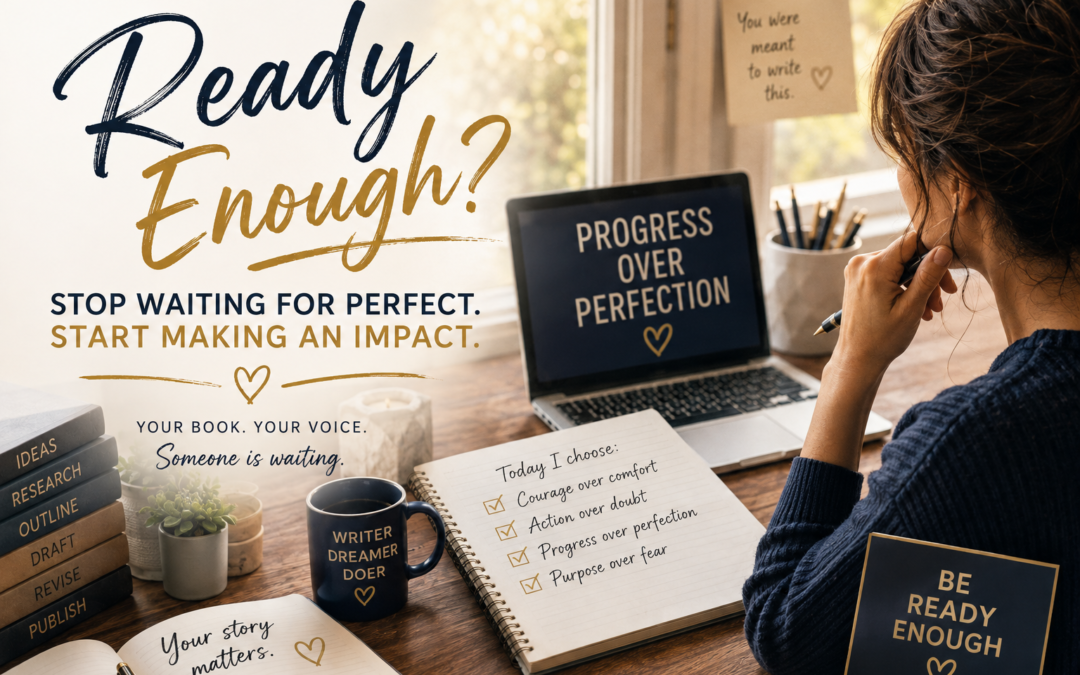
Maybe We Don't Need to Be Ready. Maybe We Need to Be Ready Enough.
I've been thinking about this phrase ever since Marjorie's post:
Ready Enough.
Not reckless.
Not careless.
Not unfinished.
Not “good enough” in the sense of accepting poor quality.
Ready enough means you have done the work.
You've respected the reader.
You've sought appropriate feedback.
You've corrected the problems you know about.
You've created something you believe has value.
And now the remaining resistance may have less to do with improving the book and more to do with protecting yourself.
That's when it may be time to move.
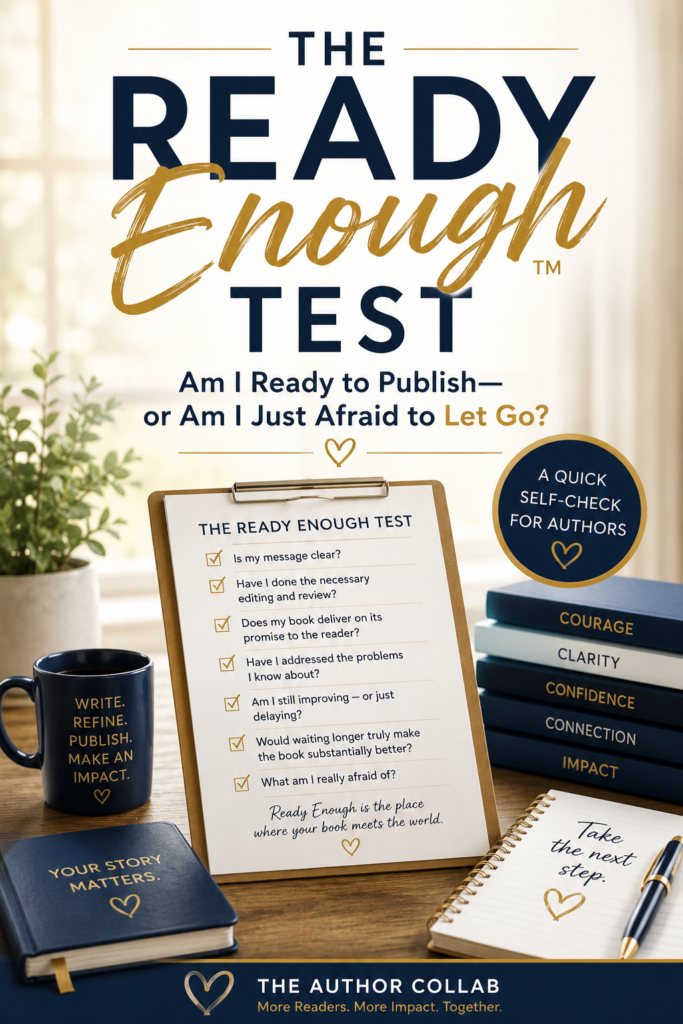
The Ready Enough Test
If you've been holding onto a manuscript or hesitating over your next author opportunity... ask yourself:
Is my message clear?
Does the book deliver what I promised the reader?
Has the manuscript received the level of editing and review appropriate for the project?
Have I corrected the problems I already know about?
Am I still making meaningful improvements, or simply rearranging words?
Am I seeking feedback because I need expertise, or because I want someone else to give me permission?
Is there a specific problem preventing me from moving forward, or just a vague feeling that I'm “not ready”?
And perhaps the most revealing question:
If I waited another six months, would the book become substantially better—or would I simply feel temporarily safer?
Your answer may tell you everything you need to know.
Ready Enough Doesn't End With Publishing
The idea of being Ready Enough applies to much more than releasing a book. Authors often wait to feel ready to promote themselves, pitch the media, approach bookstores, enter awards, start a newsletter, appear on podcasts, pursue speaking opportunities, collaborate with other authors, ask for reviews, or even call themselves experts. Sometimes we're hesitant to simply step forward and tell the world, “I wrote this, and I believe it has something worth sharing.”
But waiting for readiness can become a habit. We tell ourselves we'll take the next step when we're more experienced, more confident, more established, or better prepared. Meanwhile, opportunities pass and our work remains quieter than it needs to be. You can lose months—or even years—waiting for a feeling that may never arrive. At some point, being Ready Enough means trusting the work you've already done and giving yourself permission to take the next step.
The next step doesn't have to be enormous.
Send one email.
Submit one application.
Ask one person.
Post one excerpt.
Enter one award.
Contact one podcast.
Share one idea.
Finish one chapter.
Upload the manuscript.
Sometimes courage isn't a giant leap.
Sometimes it's simply pressing Send.
Eventually, You Have to Deliver the Book
Twenty years and nine months.
I can laugh about it now because the metaphor is irresistible.
The Expectant Author had perhaps one of the longest pregnancies in publishing history.
But eventually, I finished it.
Eventually, I published it.
Eventually, I stopped carrying the book and allowed it to become something other people could experience.
And that's what books are supposed to do.
There comes a point when preparation has done its job.
The manuscript may never feel perfect. You may never feel completely confident. There will always be another sentence you could tweak, another marketing idea you could explore, another expert you could consult, and another perfectly reasonable excuse to wait.
But books weren't written to remain safely inside their authors.
Eventually, you have to deliver them.
You don't have to know exactly what will happen next.
You don't have to silence every critic.
You don't have to eliminate every doubt.
And you certainly don't have to feel completely ready.
You just have to decide when you've become Ready Enough.
Your Turn
What are you waiting to feel ready for?
A manuscript?
A book launch?
An award submission?
A podcast pitch?
A speaking opportunity?
A collaboration?
Something entirely different?
Ask yourself one question today:
Am I truly not ready—or am I ready enough to take the next step?
Because somewhere between not yet and perfect is the place where most authors actually build their careers.
And it usually begins with action.
Are you Ready Enough? Take the Ready Enough Test™ and find out! You can DOWNLOAD it for Free (click on the image, no opt in)